Adaptive Neural Network Overlays Responding to Player Biometric Signals During Prolonged Competitive Gaming Sessions
Iris Long · Aug 4, 2026
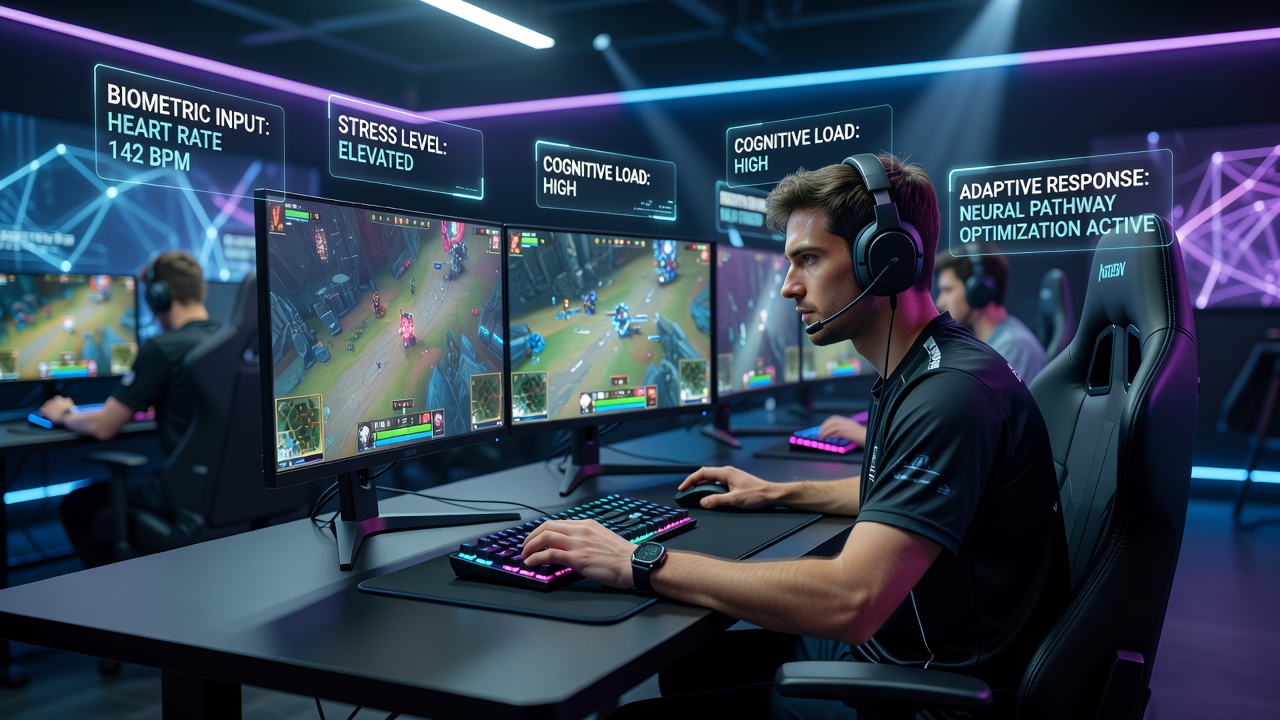
Adaptive Neural Network Overlays Responding to Player Biometric Signals During Prolonged Competitive Gaming Sessions
Competitive gaming sessions that stretch across several hours place sustained demands on players, and adaptive neural network overlays have emerged as tools that process biometric signals to modify on-screen elements accordingly. These systems collect data from wearable sensors that track heart rate, skin conductance, and brainwave patterns, then feed the information into trained neural models that adjust overlay transparency, color palettes, and data density without interrupting gameplay flow. Researchers at institutions such as the University of Tokyo have documented how such overlays maintain visual clarity while responding to physiological changes that occur after the first ninety minutes of intense competition.
Core Mechanisms Behind Biometric Integration
Neural networks in these overlays operate through layered architectures that classify incoming biometric streams into categories like elevated stress or sustained focus, and the models trigger corresponding visual shifts such as reducing peripheral HUD clutter when arousal markers rise. Data from multiple sensors arrives at sampling rates between 100 and 250 hertz, allowing the network to update overlay parameters several times per second while players remain unaware of the underlying calculations. Engineers calibrate the models using datasets gathered from professional esports teams during practice matches, ensuring that the adjustments align with observed performance patterns rather than generic thresholds.
Application During Extended Tournament Play
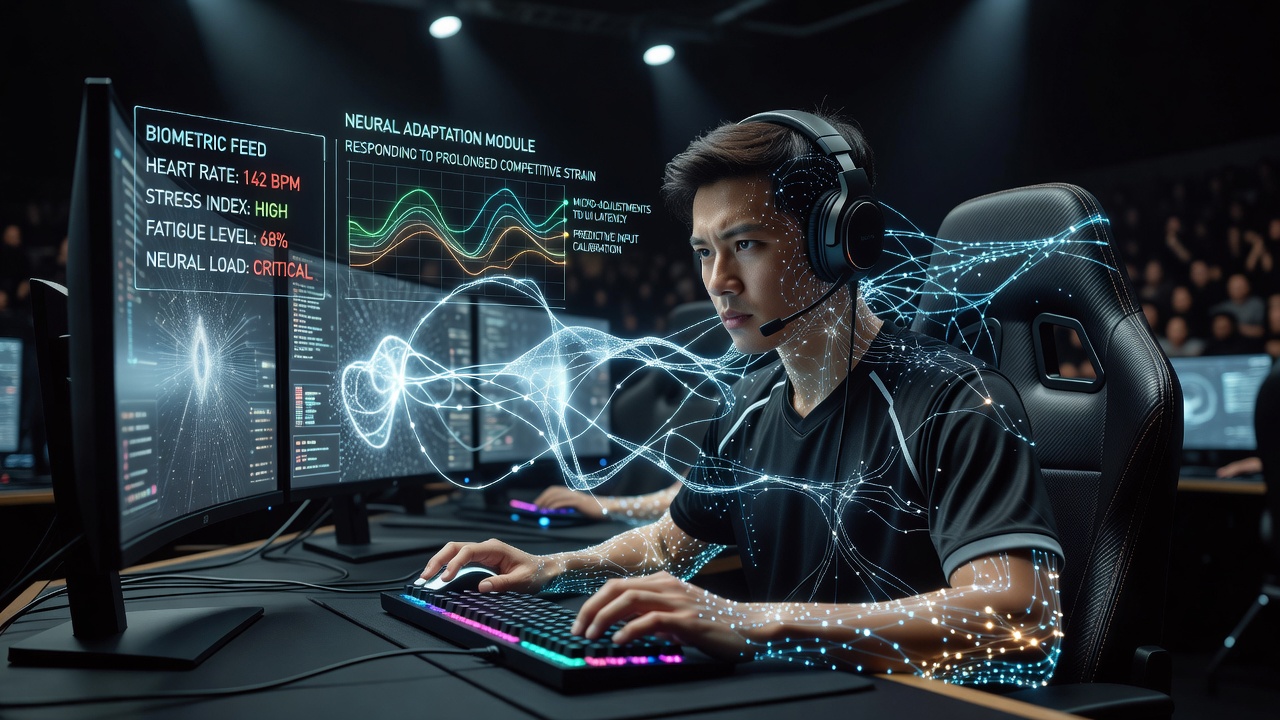
In August 2026 several major esports events incorporated early versions of these overlays into broadcast and player interfaces, where the systems tracked cumulative fatigue indicators across best-of-five series that sometimes exceeded four hours. Observers noted that when electrodermal activity increased beyond baseline levels the overlays automatically muted non-essential notifications and enlarged critical minimap elements, while heart-rate spikes prompted subtle desaturation of background graphics to reduce visual strain. Teams that tested the technology reported that players maintained consistent decision-making speed even in later map stages, although the precise performance gains varied by individual physiology and game genre.
But here's the thing: integration requires careful synchronization between sensor hardware and game engines, because any latency above thirty milliseconds can disrupt the intended adaptive response. Developers address this constraint through edge-computing modules placed near the player station that handle inference locally before relaying only summary adjustments to the central overlay renderer. Industry groups such as the Entertainment Software Association have begun publishing guidelines on minimum sensor accuracy standards, which helps standardize deployment across different tournament venues.
Challenges in Data Privacy and Model Training
Biometric data collected during competitive play falls under strict regulatory frameworks in multiple jurisdictions, and developers must obtain explicit consent while anonymizing records before they enter training pipelines. The European Data Protection Board has issued clarification documents that classify gaming biometrics as sensitive personal data when heart-rate or EEG readings can be linked to identifiable individuals, prompting teams to implement on-device encryption and automatic deletion after each session. Training datasets therefore rely on aggregated, de-identified samples that still capture enough variance across age groups, genders, and competitive levels to produce robust models.
One study conducted at Stanford University revealed that neural networks trained on diverse player cohorts achieved higher accuracy in predicting fatigue onset compared with models built from narrower populations, and the difference became statistically significant after the third hour of continuous play. Those findings encouraged organizers to expand recruitment for calibration sessions so that overlays function reliably for both established professionals and emerging talents who may exhibit different physiological baselines.
Future Refinements and Cross-Platform Considerations
Current implementations focus primarily on visual overlays, yet ongoing research explores adding auditory cue modulation and haptic feedback adjustments that respond to the same biometric streams. Cross-platform compatibility remains an active area of work because console ecosystems and PC environments transmit sensor data through different protocols, and developers must maintain consistent model performance despite these variations. Figures from the IEEE Games Technical Committee indicate that by mid-2026 more than forty professional organizations had adopted at least pilot versions of biometric-adaptive overlays, with adoption rates highest in titles that feature long match durations such as strategy and simulation genres.
What's interesting is how the systems also support post-match analysis, where coaches review time-stamped biometric logs alongside performance metrics to identify moments when physiological stress correlated with decision errors. This secondary use case has prompted several universities to establish dedicated esports performance laboratories that combine neural-network research with sports-science methodologies.
Conclusion
Adaptive neural network overlays that respond to biometric signals represent a measurable step toward interfaces that accommodate the physiological realities of prolonged competitive gaming. Continued refinement of sensor accuracy, model training diversity, and regulatory compliance will determine how widely these systems appear in future tournaments, while existing deployments in 2026 already demonstrate their capacity to process real-time physiological data without interfering with player focus.