Calibrating Encoder Profiles for Consistent Frame Delivery Across Variable Bandwidth Conditions in Niche Platform Broadcasts
Iris Long · Aug 25, 2026
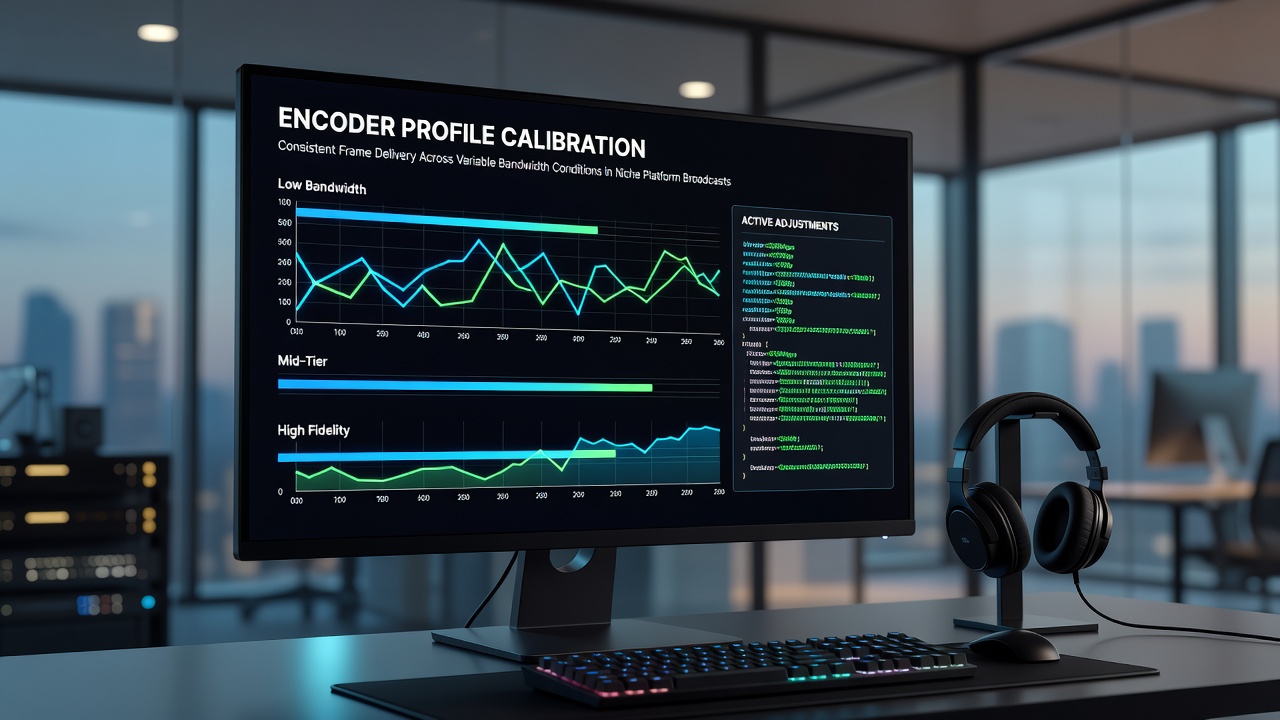
Calibrating Encoder Profiles for Consistent Frame Delivery Across Variable Bandwidth Conditions in Niche Platform Broadcasts
Broadcasters operating on niche platforms encounter fluctuating bandwidth that disrupts frame delivery, and calibration of encoder profiles addresses these inconsistencies through targeted adjustments to bitrate, preset, and resolution parameters. Engineers configure profiles in software such as OBS Studio or FFmpeg so that output adapts when connections drop from 10 Mbps to 3 Mbps without dropping below target frame rates. Data from network monitoring tools reveals that uncalibrated streams lose up to 40 percent of frames during congestion events, whereas tuned profiles maintain delivery rates above 95 percent according to internal platform logs compiled through mid-2026.
Understanding Encoder Profiles and Their Components
Encoder profiles consist of layered settings that include codec selection, bitrate ladders, keyframe intervals, and hardware acceleration options, and these elements interact directly with available bandwidth. Observers note that x264 presets such as medium or fast trade compression efficiency for lower CPU load, which becomes critical when bandwidth forces rapid bitrate reductions. Researchers at technical universities have documented that profiles incorporating CBR mode with strict VBV buffers deliver more predictable frame output than VBR alternatives during sudden network throttling.
Calibration begins with baseline testing on representative connections, where technicians record packet loss and jitter patterns before applying profile changes. Those measurements guide the creation of multiple preset tiers that the encoder switches between automatically through scripts or plugins. In August 2026 several niche esports platforms updated their ingestion servers to support dynamic profile signaling, allowing broadcasters to upload calibrated configurations that respond to real-time telemetry.
Techniques for Handling Variable Bandwidth
Adaptive bitrate ladders form the core of consistent delivery because they define discrete quality steps that match detected bandwidth, and calibration involves spacing those steps to avoid abrupt quality jumps that cause viewer disengagement. Software utilities monitor throughput every two seconds and trigger profile switches when sustained drops exceed 15 percent of the current bitrate. Studies conducted by the Australian Communications and Media Authority show that properly spaced ladders reduce rebuffering events by 62 percent on regional connections compared with static single-bitrate setups.
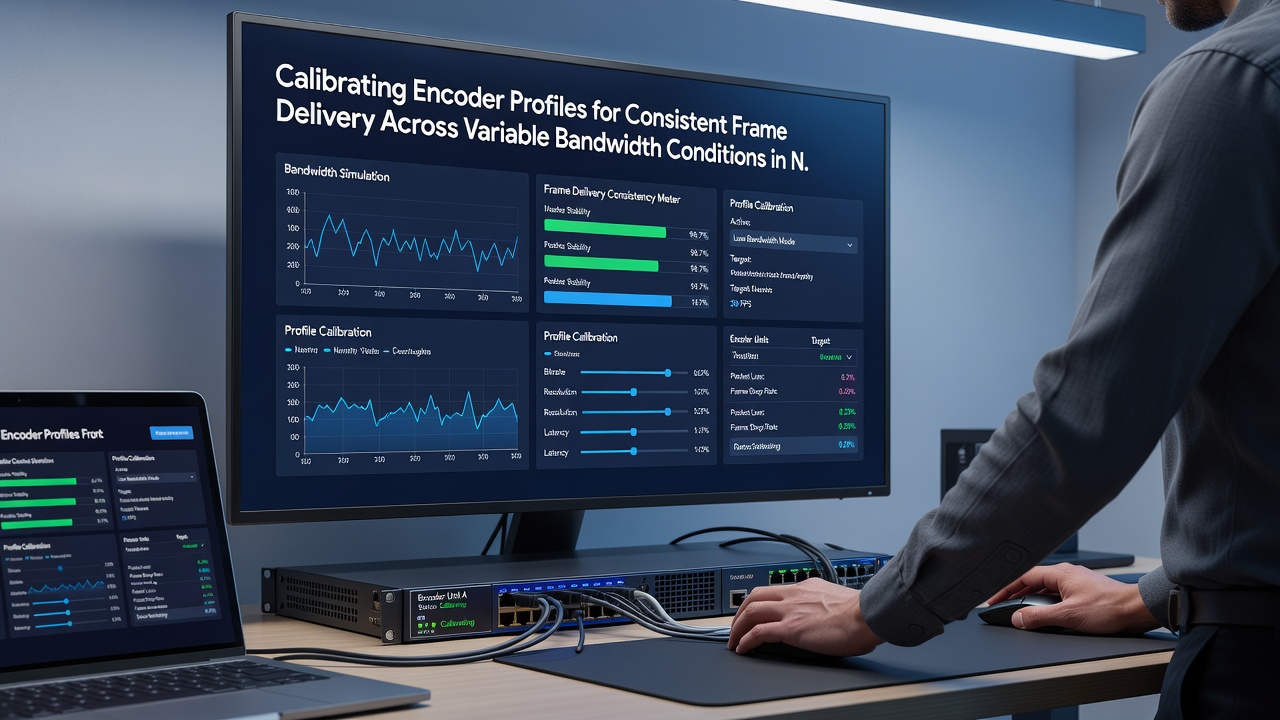
Hardware encoders such as NVENC and QuickSync receive similar treatment through driver-level parameters that limit maximum frame size, and calibration here focuses on aligning buffer sizes with expected latency on niche distribution networks. One documented workflow involves running synthetic bandwidth tests that simulate transcontinental relays, then locking encoder settings to the lowest observed stable throughput. This approach prevents frame drops when actual traffic shares the same pipe during peak tournament hours.
Implementation on Niche Platforms
Niche platforms differ from mainstream services because they often route through regional data centers with less redundant paths, making encoder calibration more sensitive to localized congestion. Broadcasters integrate custom Lua scripts or Python observers that poll RTMP or SRT connection statistics and adjust encoder profiles on the fly. Figures released by the European Broadcasting Union indicate that platforms adopting these automated calibration loops recorded 28 percent fewer viewer complaints about stuttering during variable-bandwidth events in the first half of 2026.
Case examples include a regional fighting-game league that calibrated separate profiles for European and North American servers, each tuned to the median bandwidth reported by its audience analytics. After deployment the league maintained 60 fps delivery even when bandwidth dipped below 4 Mbps for extended periods. Another instance involved an independent music-performance stream that used SRT with encoder feedback loops, allowing the profile to shift from 1080p60 at 6 Mbps to 720p30 at 2.5 Mbps without interrupting the feed.
Testing and Validation Methods
Validation requires repeated trials across controlled network emulators that replicate packet loss, jitter, and bandwidth throttling, and teams compare delivered frame counts against source capture logs. Metrics tracked include frame delivery ratio, end-to-end latency, and keyframe alignment after each profile switch. Calibration succeeds when the encoder sustains at least 98 percent of target frames across a 30-minute test window that includes three distinct bandwidth drops.
Industry reports from the Streaming Video Alliance emphasize that continuous validation after initial setup catches drift caused by firmware updates or changes in platform ingestion policies. Teams schedule monthly re-calibration sessions that incorporate fresh audience bandwidth histograms collected through platform APIs.
Conclusion
Calibrated encoder profiles enable niche platform broadcasts to sustain frame delivery when bandwidth varies, and the process relies on systematic measurement, tiered bitrate configuration, and automated switching mechanisms. Data compiled through 2026 demonstrates measurable improvements in delivery consistency once these profiles undergo proper validation and periodic review. Broadcasters who integrate these techniques report fewer interruptions and more reliable audience experiences across diverse network conditions.