Charting Emotional Peaks: Employing Chat Sentiment Analysis to Trigger Contextual In-Stream Rewards During Prolonged Competitive Sessions
Ulrich Lange · May 31, 2026
Charting Emotional Peaks: Employing Chat Sentiment Analysis to Trigger Contextual In-Stream Rewards During Prolonged Competitive Sessions
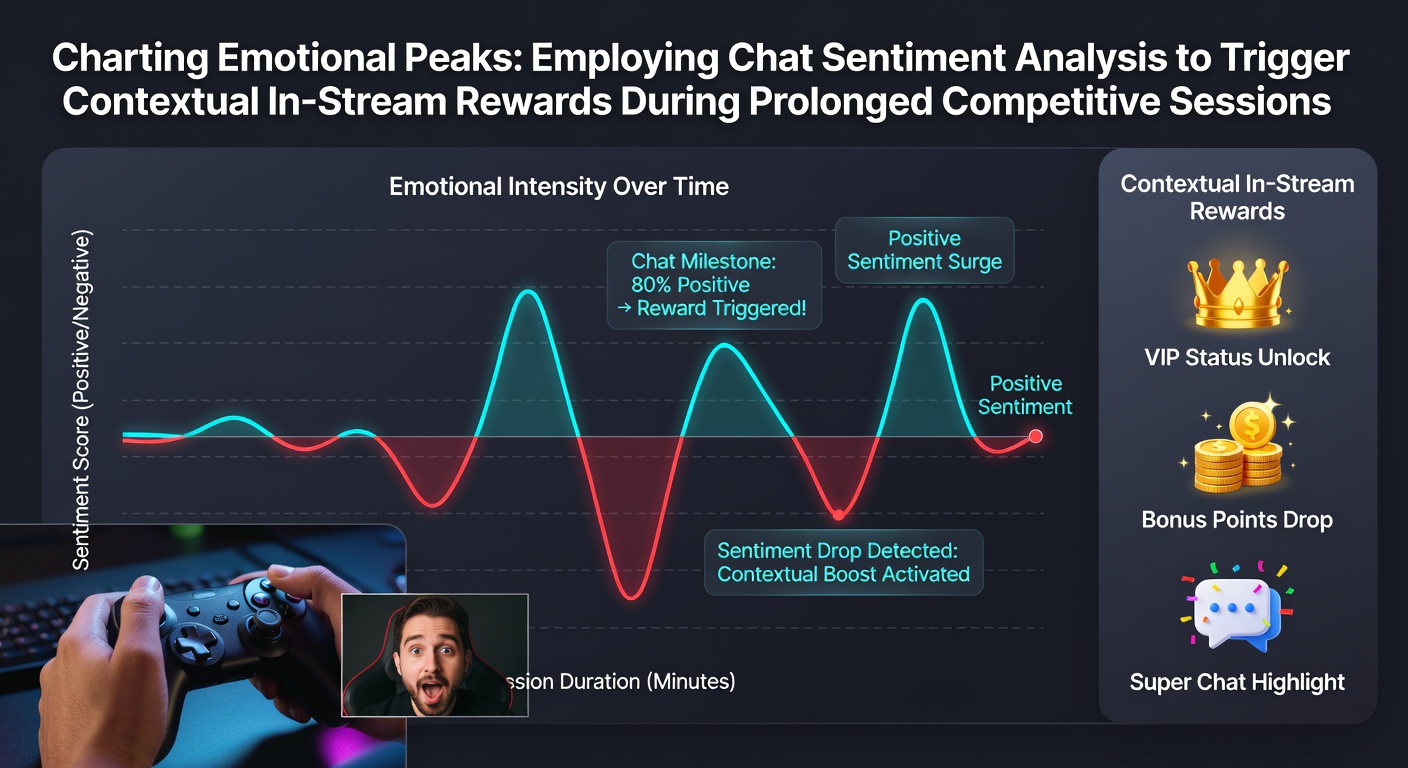
Competitive gaming streams often extend for hours on end, and platforms have turned to chat sentiment analysis as a method for identifying viewer engagement spikes that occur during intense match moments, while data indicates these tools help broadcasters respond with targeted rewards such as custom badges, channel points, or timed alerts that align with audience mood shifts.
Mapping Viewer Emotions Through Natural Language Processing
Researchers in computational linguistics have developed models that process thousands of chat messages per minute to classify sentiment into categories including excitement, frustration, and neutral states, and studies from institutions like the University of Melbourne show that prolonged esports sessions generate distinct emotional patterns detectable through keyword clusters and emoji usage rates. These systems rely on machine learning algorithms trained on large datasets from past broadcasts, allowing them to adapt to slang variations common in gaming communities across different regions, whereas traditional polling methods fail to capture spontaneous reactions that unfold in real time during tournaments.
Implementation typically involves integration with existing chat platforms where APIs feed incoming messages into sentiment classifiers that score positivity levels on a continuous scale, and when thresholds are crossed the system activates predefined reward sequences without requiring manual intervention from the streamer. Observers note that accuracy improves when models incorporate context from game events such as comebacks or eliminations, since raw text alone can misinterpret sarcasm prevalent in high-stakes matches.
Triggering Contextual Rewards at Peak Moments
Once sentiment analysis identifies an emotional peak the platform can deploy rewards that feel directly tied to the current session dynamics, and examples include granting temporary emote unlocks during celebration spikes or distributing bonus loyalty points after collective tension releases following close rounds. Industry reports from the Entertainment Software Association highlight how such mechanisms encourage sustained participation because viewers receive immediate feedback that reinforces their emotional investment in the broadcast.
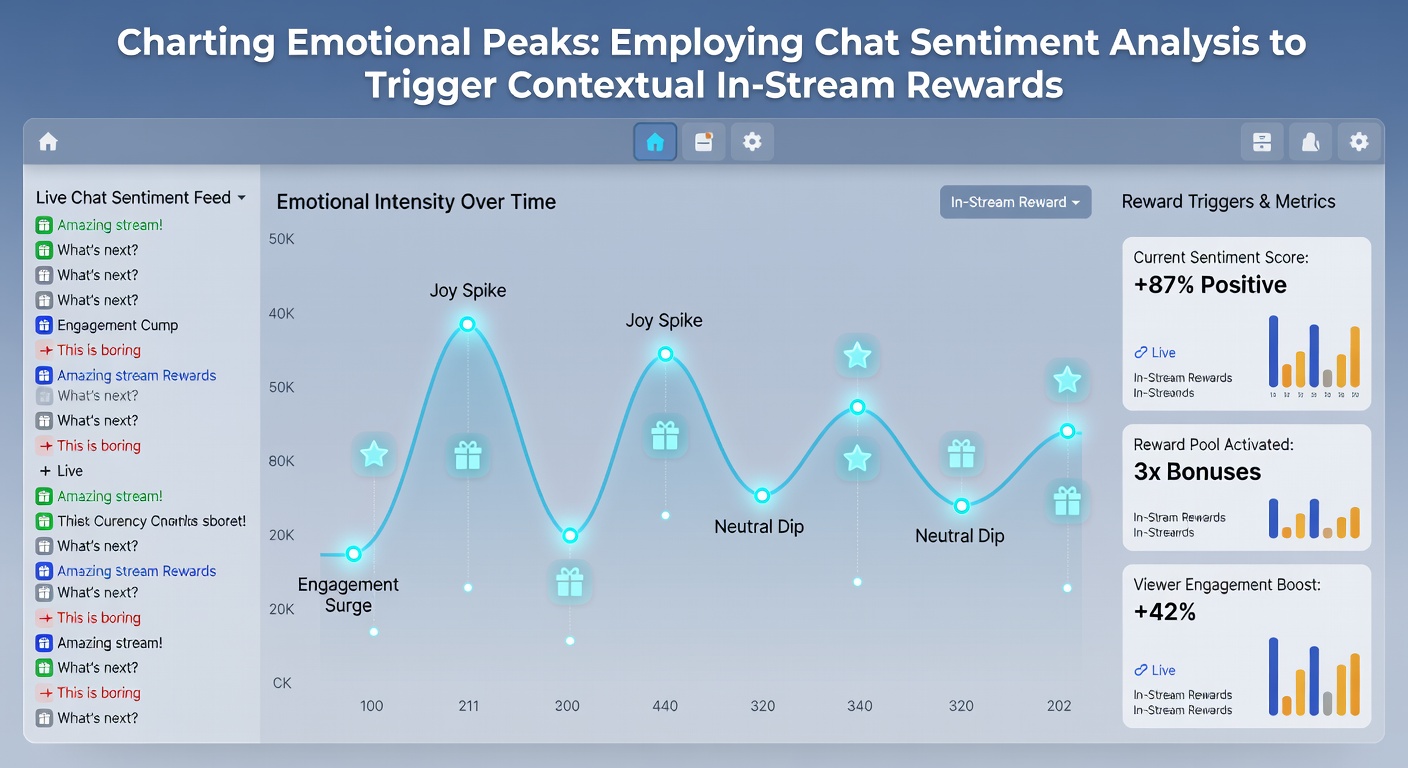
Technical setups often combine open-source libraries with custom bots that monitor both chat velocity and sentiment polarity, while synchronization with game telemetry data allows rewards to reference specific in-match occurrences such as record-breaking plays. European research consortia have documented cases where reward timing based on sentiment reduced viewer churn rates in extended sessions, because the system responds to collective mood rather than fixed schedules that ignore audience energy fluctuations.
Integration Challenges and Platform Adaptations
Latency remains a key consideration when deploying these systems during live competitive events, since delays between message analysis and reward delivery can diminish the contextual impact, and developers address this through edge computing solutions that process data closer to regional servers. Data from Canadian gaming industry analyses reveals that multilingual chat environments require specialized training sets to maintain detection precision, particularly when audiences mix languages within the same stream.
Privacy protocols govern how chat data is handled, with platforms anonymizing inputs before analysis and providing opt-out options for participants, whereas regulatory frameworks in various jurisdictions emphasize transparent data usage policies to maintain user trust. Broadcasters who adopt these tools report that reward systems evolve based on aggregated performance metrics from multiple sessions, enabling iterative refinements that better match audience preferences over time.
Future Developments in Sentiment-Driven Streaming
As of May 2026 several major platforms continue expanding sentiment analysis capabilities to include multimodal inputs such as voice tone from viewer submissions and visual reaction overlays, and this progression builds on existing text-based models to create more nuanced reward triggers. Academic papers presented at recent conferences detail experiments where hybrid systems combined sentiment scores with viewer retention statistics to predict optimal reward types for different competitive genres.
Collaboration between tool developers and esports organizations has produced standardized APIs that facilitate cross-platform deployment, allowing smaller broadcasters to access enterprise-level analysis features without extensive custom coding. Those who have studied adoption patterns observe that reward contextualization strengthens community bonds during marathon events because it transforms passive watching into interactive participation synchronized with emotional highs.
Conclusion
Chat sentiment analysis paired with contextual reward systems offers a structured approach to managing engagement throughout extended competitive streams, and evidence from multiple research sources demonstrates measurable effects on viewer interaction metrics when implementations account for timing, accuracy, and privacy factors. Continued refinement of these technologies depends on ongoing data collection and model training that reflects evolving chat behaviors across global gaming audiences.