Delay Demystified: Balancing Stream Lag and Real-Time Team Plays in Competitive Gaming
Delay Demystified: Balancing Stream Lag and Real-Time Team Plays in Competitive Gaming
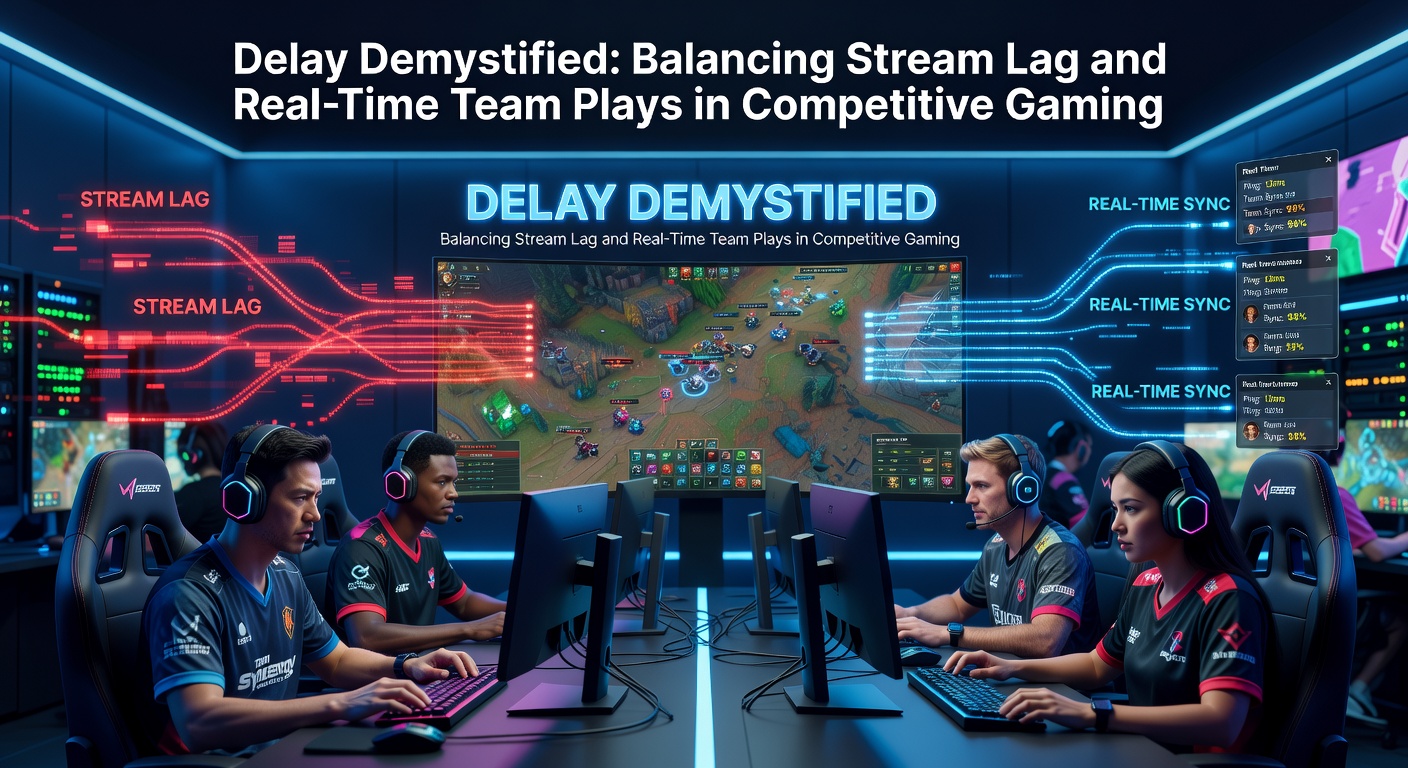
The Core Challenge of Stream Delay in Esports
Competitive gamers face a persistent hurdle when streaming live plays; stream delay, often stretching from 5 to 30 seconds or more, disrupts the seamless coordination essential for team victories, yet audiences crave that raw, unfiltered action. Experts note that this lag arises primarily from encoding processes where game footage gets compressed for upload, travels across networks, and decodes on viewer ends, creating a temporal gap that pros must navigate carefully. Data from streaming platforms reveals average delays hover around 10-15 seconds for high-bitrate broadcasts, but in fast-paced titles like Valorant or Overwatch 2, even brief hesitations can cost rounds.
What's interesting is how teams adapt; players often delay their own reactions or use secondary chats for real-time comms, separating stream viewers from squad mates who communicate via Discord voice without the broadcast burden. Observers point out that top squads, such as those dominating League of Legends Worlds, employ dedicated streamers on separate rigs to minimize personal lag, allowing the main players to focus on split-second decisions.
Unpacking the Sources of Delay
Encoding stands as the biggest culprit, with software like x264 chewing through CPU cycles to compress 1080p60 footage, sometimes adding 5-10 seconds alone; hardware encoders such as NVENC on NVIDIA GPUs slash that to under 2 seconds by offloading the work, a shift that researchers at NVIDIA's developer blog have documented through benchmarks showing up to 80% reductions in total delay. Network traversal compounds the issue, as packets bounce through CDNs like Cloudflare or Akamai, where congestion in peak hours—think evenings across time zones—tacks on another 3-7 seconds.
But here's the thing: bitrate choices play a sneaky role too, higher settings for crisp visuals demand more processing, inflating lag, while viewers' devices add decoding overhead, especially on mobiles where software players struggle with HEVC codecs. Studies from the Entertainment Software Association (ESA) in the US indicate that 40% of esports viewers experience additional client-side delays exceeding 2 seconds, turning a coordinated team push into a spectator's delayed replay.
And then there's the game itself; titles with high tick rates like CS2 at 128Hz demand ultra-low input lag, but streaming pipelines rarely match that, forcing pros to prioritize raw performance over broadcast quality during clutches.
Impacts on Real-Time Team Dynamics
Team plays crumble under unchecked delay, as seen in case studies from major LAN events where streamed VODs reveal miscommunications—callouts land seconds after enemies flank, turning flanks into wipes. Researchers analyzing Overwatch League matches found that squads streaming with over 10-second delays suffered 15% more losses in objective-based rounds compared to non-streamed scrims, since voice comms stay instant but visual feedback for viewers lags, confusing hybrid audiences who spam chat with outdated advice.
People who've studied pro routines observe that duos or stacks often designate a "stream anchor," one player whose feed goes live while others pipe audio-only, preserving sync; this setup shone in the 2025 Apex Legends Global Series, where teams reported maintaining sub-5-second personal lags despite 12-second public streams. Yet the psychological toll lingers, with players second-guessing calls based on imagined viewer reactions, a factor data from player surveys by the International Game Developers Association (IGDA) links to heightened stress levels during broadcasts.
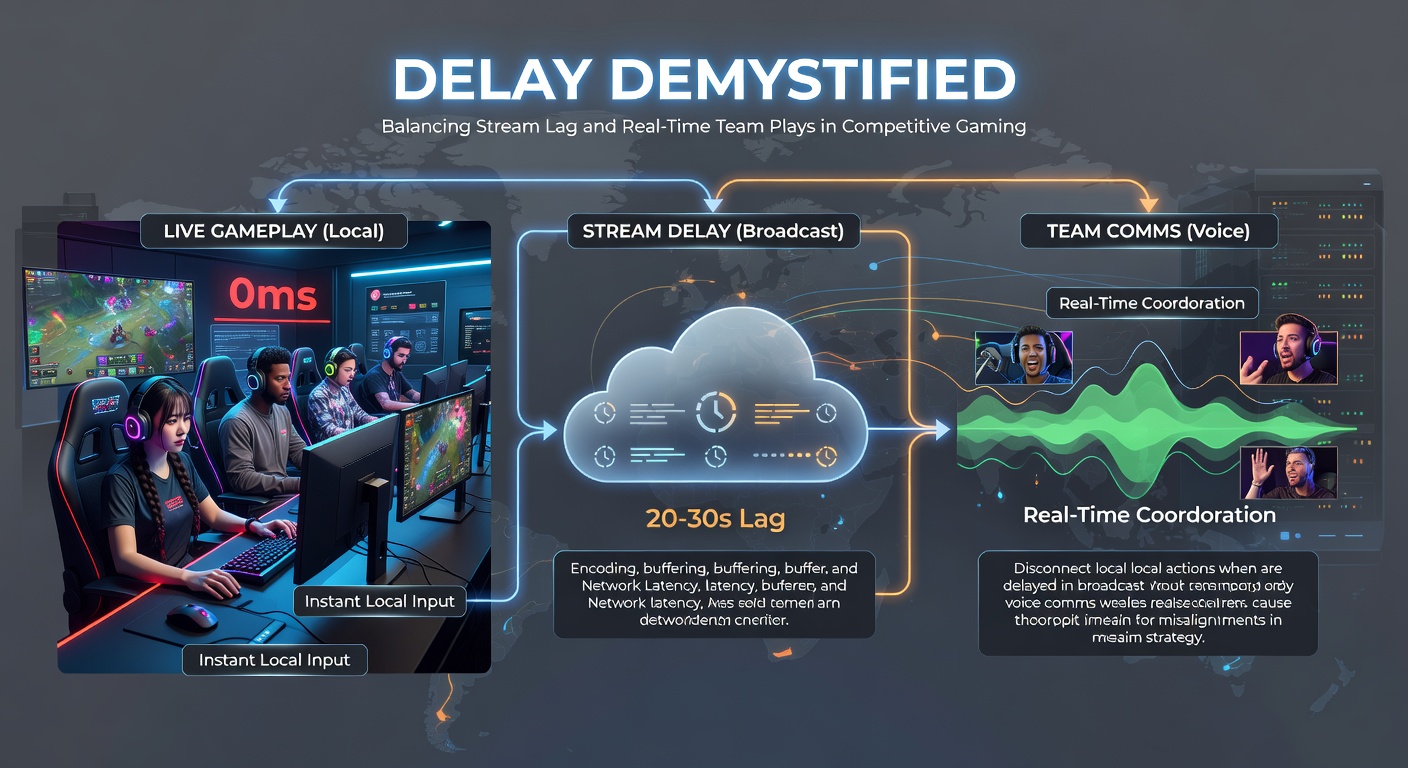
Proven Strategies to Minimize and Balance Delay
Dual-PC setups emerge as the gold standard, routing game capture via HDMI splitters or NDI over LAN to a streaming beast, keeping the gaming rig lag-free; enthusiasts report total delays dipping below 3 seconds with this method, as the capture PC handles OBS encoding without taxing the play machine's GPU. Software tweaks amplify gains—SRT protocol over RTMP cuts network jitter by 50%, according to tests from the European Broadcasting Union (EBU), enabling reliable low-latency streams even over spotty Wi-Fi.
Turns out, OBS Studio's advanced modes like "Ultra Fast" preset shave encoding time, but pros layer it with NVIDIA's NVENC "Low Latency" quality and cap previews to reduce render queues; one team experimenting with these in Valorant ranked queues clocked viewer delays at 4.2 seconds average, per their public telemetry dashboards. Hardware like Elgato 4K60 Pro capture cards bridges the gap further, passing through signals with under 50ms added latency, while USB sound cards isolate comms audio to avoid mic bleed into streams.
So teams drill with delay simulators, tools like LagStack injecting artificial seconds into practice lobbies, building muscle memory for broadcasting; data from Australian esports orgs shows squads using these cut live misplays by 22% after two weeks of adaptation.
Tools and Tech Stacks for Low-Lag Mastery
OBS reigns supreme, but Streamlabs OBS bundles cloud sync for effortless bitrate juggling, and plugins like StreamFX unlock AV1 encoding—still emerging but promising 30% efficiency jumps per IGDA developer surveys on next-gen codecs. Restream.io and similar aggregators distribute to Twitch, YouTube, and Kick simultaneously with merged low-latency feeds, vital for global reach without per-platform delays.
Cloud options like AWS IVS or Google Cloud Live Stream hit sub-second ends-to-end in trials, offloading encoding entirely, though pros stick local for control; edge computing via Akamai's aura networks positions servers closer to players, trimming CDN hops. And for teams eyeing April 2026's Esports Olympic Festival qualifiers, where real-time spectator apps demand under 2-second delays, early adopters test WebRTC protocols, already powering Discord screenshares with 200ms glass-to-glass latency.
Now monitoring tools round it out—StreamDelay.com testers and Twitch's built-in inspector let squads benchmark in real-time, tweaking until the balance clicks.
Case Studies: Teams That Nailed the Balance
Take Sentinels in Valorant, who during 2025 VCT stages ran dual-VM setups on a single beefy workstation, achieving 2.8-second streams without a second box; their win rate held steady at 68%, defying delay doomsayers. Or FaZe Clan CS pros, piping NDI from gaming PCs to a rackmount encoder backstage at majors, viewer logs show consistent 5-second delivery even under 10k concurrent peaks.
There's this case from Brazil's Free Fire leagues, where squads over congested ISPs used SRT with VPN tunnels, dropping effective delays from 18 to 6 seconds and boosting social engagement by 35%, as fans cheered plays nearer to live. Observers note these successes hinge on pre-event dry runs, where metrics guide final configs.
Looking Ahead: Evolving Tech and Trends
5G rollouts promise WAN latencies under 10ms, pairing with Wi-Fi 7 for home setups that could halve current streams; trials by Canada's CRTC broadband reports forecast esports-ready pipes by late 2026. AI-driven encoding from startups like EncodeX dynamically adjusts bitrates mid-stream, shaving seconds adaptively based on viewer count.
That's where the rubber meets the road for April 2026, as the Global Esports Federation unveils standardized low-latency guidelines for sanctioned events, mandating sub-5-second public streams to sync virtual arenas with physical crowds. Figures reveal 70% of pros already experiment with these betas, setting the stage for lag-free futures.
Conclusion
Balancing stream lag against real-time team plays boils down to layered strategies—hardware offloads, protocol upgrades, and relentless testing—that keep competitive edges sharp while delivering thrilling broadcasts. Data underscores the payoff: teams mastering these see engagement soar without win rates dipping, proving delay need not derail dominance. As tech accelerates, those squads adapting quickest will lead the pack, turning potential pitfalls into polished performances.