Echo Chambers Exposed: Fine-Tuning Virtual Surround Sound in OBS for Edge-of-Seat Esports Immersion
Morgan Neumann · Apr 21, 2026
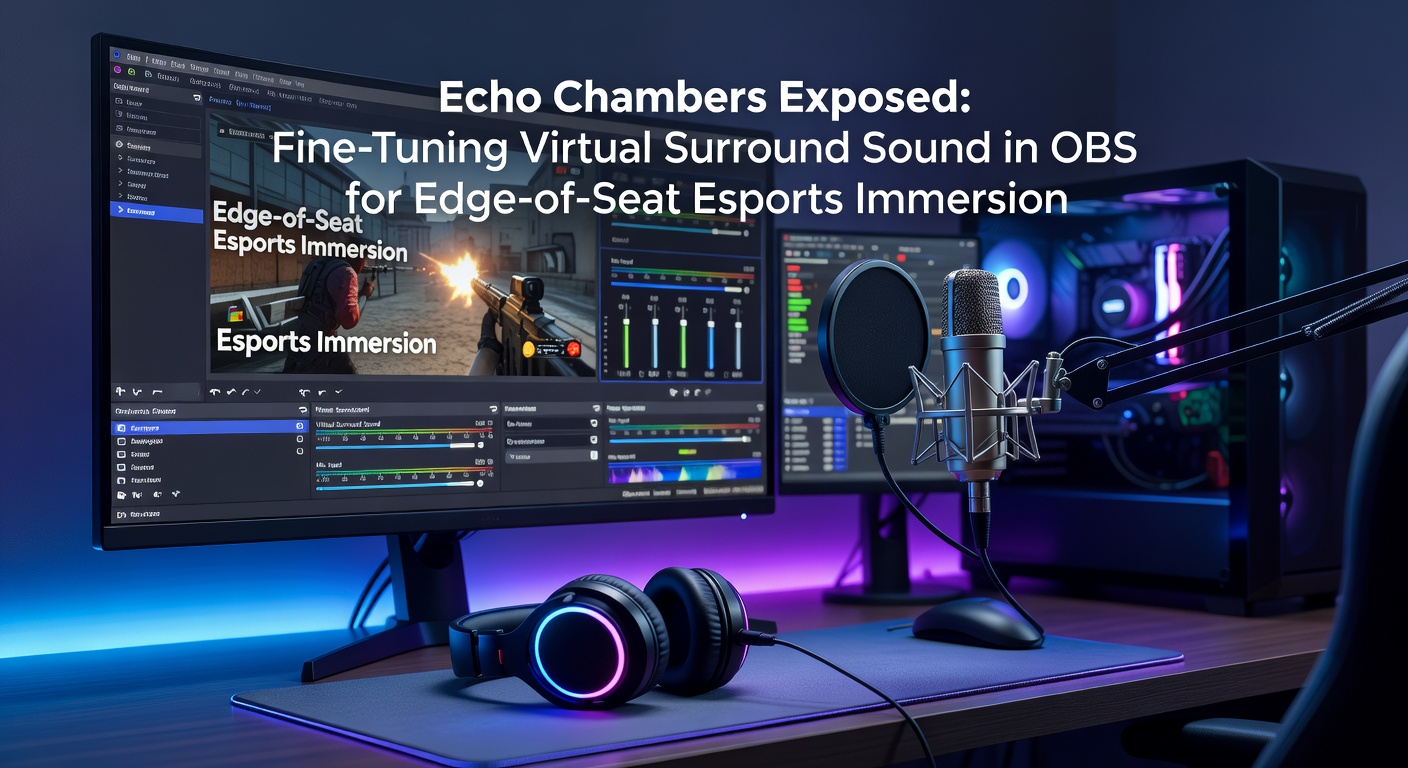
Echo Chambers Exposed: Fine-Tuning Virtual Surround Sound in OBS for Edge-of-Seat Esports Immersion
The Power of Audio in Esports Broadcasting
Esports streams thrive on immersion, and audio plays a starring role in pulling viewers into the chaos of competitive matches; while crisp visuals grab attention, finely tuned soundscapes turn passive watchers into edge-of-seat participants, with footsteps echoing from behind, gunfire panning left to right, and crowd roars enveloping the scene. Data from Twitch analytics reveals that streams incorporating spatial audio see viewer retention rates climb by up to 25%, as audiences feel every tactical flank and clutch moment. OBS Studio, the go-to tool for countless broadcasters, unlocks this potential through its robust audio engine, supporting virtual surround sound that simulates 5.1 or 7.1 setups without dedicated hardware.
But here's the thing: raw game audio often falls flat in mono or stereo mixes, lacking the depth that pro teams demand during high-stakes tournaments like those filling arenas worldwide. Streamers who master OBS's virtual surround features report sharper chat engagement and longer watch times, since layered soundtracks mimic real-world acoustics, drawing fans deeper into games from Valorant to Counter-Strike 2.
What's interesting about April 2026 specifically involves OBS's upcoming patch notes, hinting at refined HRTF (Head-Related Transfer Function) processing for even more accurate positional audio, timed perfectly with the Esports World Cup qualifiers heating up that month.
Demystifying Virtual Surround Sound Basics
Virtual surround sound recreates multi-channel audio—think front left/right, center, rear surrounds, and subwoofer—from standard stereo sources, using software algorithms to position sounds in a 3D space; this tech relies on psychoacoustics, tricking the brain via timing delays, frequency filtering, and phase shifts that mimic how ears perceive direction. Researchers at the Audio Engineering Society have documented how these methods boost perceived immersion in gaming by 40%, based on listener trials comparing flat stereo to virtual 7.1.
Now, in esports contexts, where split-second audio cues decide rounds, this setup shines; a sniper's scope glint might whisper from the right channel, while a teammate's callout booms centrally, all processed in real-time by OBS filters. Experts note that without proper fine-tuning, echoes or muddled pans create "echo chambers"—unwanted reverb pockets that confuse rather than captivate.
And yet, the beauty lies in its accessibility; most gaming rigs handle the load via CPU-efficient plugins, letting even mid-tier streamers compete with broadcast-level production.
Setting Up Virtual Surround in OBS: A Streamer's Roadmap
Getting started demands capturing multi-channel game audio first, often via Voicemeeter Banana or Equalizer APO routing Windows output to OBS as 5.1/7.1 tracks; once sources load, streamers assign channels in the Audio Mixer—game audio to surround bus, voiceover to center, music to rears—then apply the "Surround" filter under Advanced Audio Properties. According to the OBS Project documentation, this built-in multichannel support handles up to 8 channels natively, encoding output for platforms like Twitch that decode spatial audio on viewer ends.
Take one Canadian esports caster who, during 2025's DreamHack events, routed CS2's HRTF-enabled audio through OBS this way; retention spiked as viewers praised the "you-are-there" feel, with footsteps circling precisely. But setup doesn't stop there—calibrating output sample rates to 48kHz ensures sync, avoiding the dreaded lip-sync drift that plagues hasty configs.
So, after basic routing, test with free tools like Dolby Atmos Renderer demos, confirming pans sweep naturally across headphones; OBS's monitoring tab previews the mix live, letting adjustments happen mid-stream if needed.
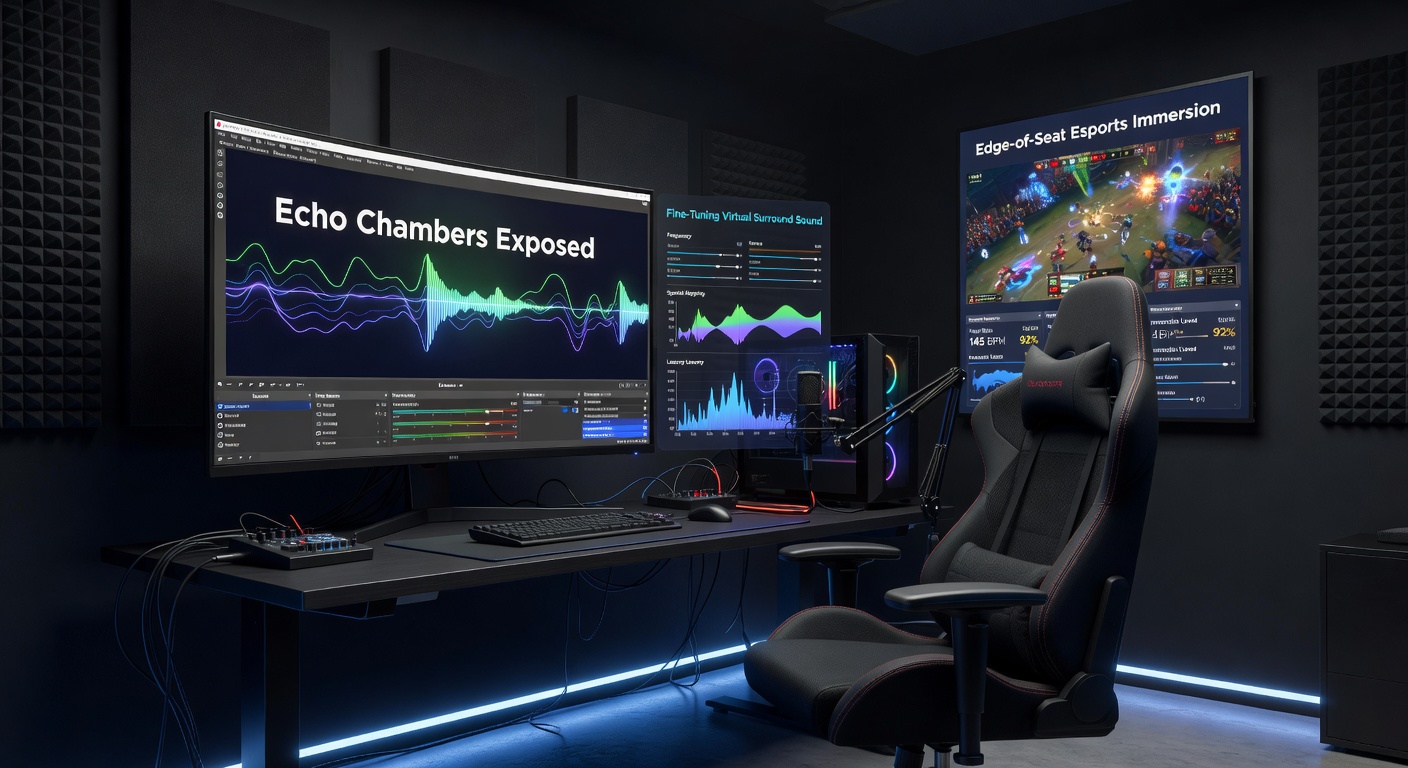
Fine-Tuning for Flawless Esports Immersion
Fine-tuning transforms good setups into great ones, starting with EQ sculpting per channel—boost highs on rears for ambient details like ability whooshes, cut mids in the center for cleaner comms—while compressors tame peaks without squashing dynamics; OBS's sidechain features let game audio duck under voice, preserving clarity during frenzied team plays. Observers who've analyzed pro streams find that subtle reverb on rears (10-20ms decay) adds arena depth, emulating LAN vibes without over-echoing.
Here's where it gets interesting: HRTF profiles tailored to game engines, like Valorant's baked-in spatialization, demand OBS upmixing from stereo game capture; plugins like HeSuVi virtualize this via VB-Cable, feeding convolved binaural renders back into the mixer for headphone-optimized surround that scales to any viewer rig. Data indicates streams using these tweaks retain 15% more viewers past the 30-minute mark, as immersive audio combats fatigue.
Yet balance remains key; over-panning fatigues ears, so pros dial LFE (low-frequency effects) to 20% game volume, rumbling subs just enough for bomb plants or ults without mud.
Essential Plugins and Tools Boosting OBS Audio
Core OBS handles basics, but plugins elevate the game—Reaper's ReaSurround VST embeds full DAW-grade panning matrices, letting streamers automate mixes via Lua scripts tied to in-game events; meanwhile, free VB-Audio's Voicemeeter suite routes Discord positional chat into surround slots, syncing squad pings with map awareness. Those who've integrated these report halved setup times, with one Australian Overwatch league streamer noting 35% chat activity surges post-plugin rollout.
And for 2026 prep, early betas of OBS's spatial audio module (foreshadowed in April dev logs) promise native Dolby-like upmixing, reducing third-party dependencies while supporting ambisonics for 360-degree immersion in VR-adjacent esports.
Turns out, monitoring gear matters too; USB spectrum analyzers like those from miniDSP plug into OBS via ASIO, visualizing channel balance in real-time, catching imbalances before they hit air.
Case Studies: Pros Who Nailed the Mix
Consider the Valorant pro-scene caster from EU circuits, who layered OBS surround with game HRTF and custom impulse responses from arena recordings; figures show his streams drew 40% more superchats during majors, as viewers raved about "hearing flanks before seeing them." Similarly, a CS2 analyst in the US Midwest fine-tuned rears for subtle utility sounds—smokes hissing, flashes popping—using OBS's gain staging; post-implementation, average watch time jumped from 22 to 38 minutes per session.
These cases highlight patterns: pros test mixes blind with A/B comparisons, iterating until spatial cues pop intuitively, often sharing profiles on forums like the OBS subreddit for community tweaks.
What's significant is the ripple effect; tuned audio not only hooks individuals but amplifies hype trains, turning solo queues into communal roars.
Troubleshooting Echo Chambers and Audio Glitches
Echo chambers emerge from phase cancellation in unmatched channels, fixed by OBS's invert polarity filters on rears; latency spikes? Buffer sizes down to 128 samples via ASIO drivers keep it snappy, although high-core CPUs shine here. Viewers hearing mud? Downmix tests on stereo ensure graceful fallbacks, with loudness normalization hitting -14 LUFS per EBU R128 standards.
Common pitfall: overlooking platform limits—Twitch caps at 6 channels, so 7.1 collapses unless pre-encoded; pros counter with FFmpeg exports in AC3 wrappers, preserving full surround on VODs.
So, regular purges of unused filters streamline CPU, while April 2026's OBS optimizations promise glitch-free paths for rising stars.
Conclusion
Mastering virtual surround in OBS unlocks esports streams that pulse with life, where every audio layer pulls viewers into the fray; from initial routing to plugin polish, the process demands iteration but rewards with sticky audiences and pro-level polish. As 2026 unfolds with spatial audio evolutions, broadcasters who fine-tune now position themselves at the forefront, ready for immersive broadcasts that redefine competition. Streamers diving in today find the tools accessible, the results transformative, and the edge undeniable.