Router QoS Tweaks That Lock In Upload Stability for Multi-User Home Gaming Transmissions in Amateur Leagues
Clara Brooks · Aug 2, 2026
Router QoS Tweaks That Lock In Upload Stability for Multi-User Home Gaming Transmissions in Amateur Leagues
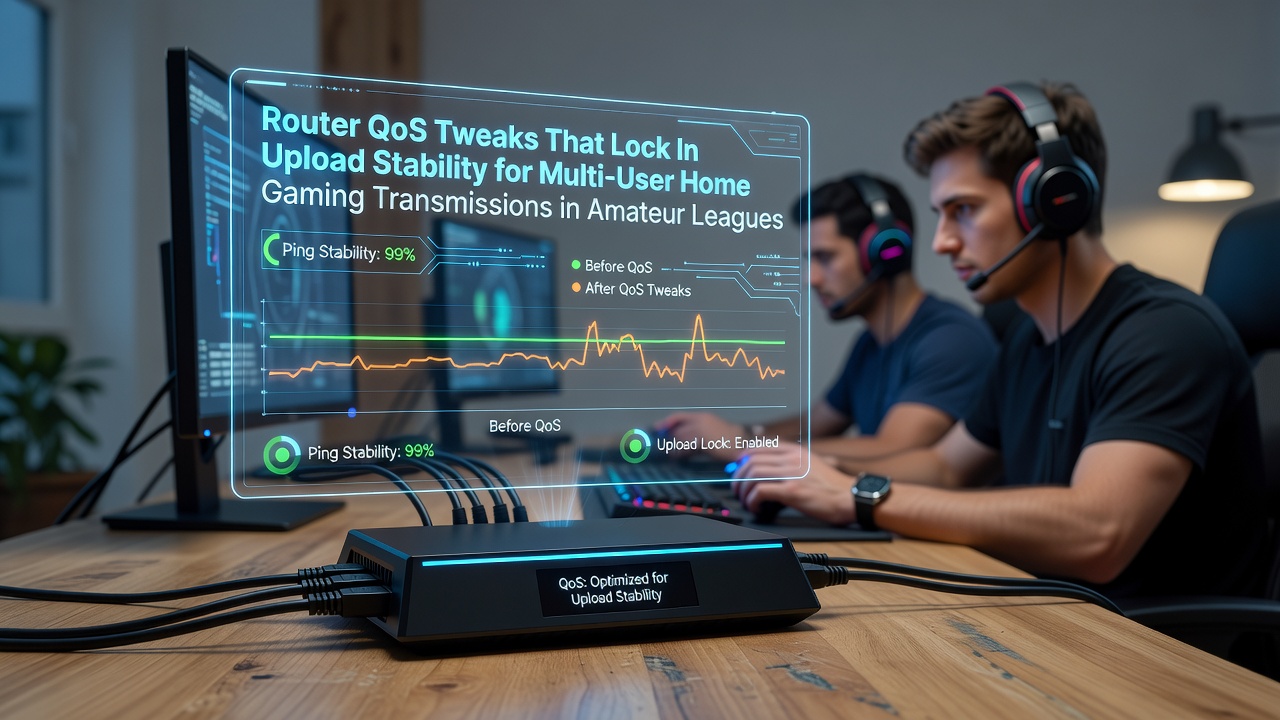
Amateur gaming leagues rely on consistent upload performance when multiple household members share the same connection, and router QoS configurations address this by classifying and prioritizing packets before they leave the local network. Observers note that upload stability becomes critical during league matches because voice comms, game state updates, and occasional team overlays compete for bandwidth with other devices streaming video or downloading updates. Data from network performance reports indicates that unmanaged queues lead to bufferbloat, where excess packets inflate latency and cause jitter spikes that disrupt real-time transmissions.
Understanding Upload Challenges in Shared Home Networks
Multi-user environments create variable demand on the uplink, and researchers have measured how simultaneous activities such as cloud backups or video calls can saturate the connection within seconds. Experts have observed that gaming protocols often use small UDP packets sent at regular intervals, yet these get delayed when larger TCP flows fill the buffer. Studies from academic networking labs show that applying fair queuing algorithms reduces latency variance by reordering packets based on flow size rather than arrival time. In August 2026, league organizers reported higher participation rates in regions where households adopted basic queue management, suggesting improved accessibility for players without dedicated lines.
Core QoS Mechanisms for Gaming Traffic
Smart Queue Management systems like fq_codel or Cake inspect packet headers and assign priority using Differentiated Services Code Point markings, which routers then map to hardware queues. Those who configure these settings typically cap the upload rate five to ten percent below the measured maximum to prevent the ISP modem buffer from filling. Active queue management drops packets early from large flows while allowing small gaming packets to pass with minimal delay. Industry documentation from the Wi-Fi Alliance explains how Wireless Multimedia extensions complement wired QoS by tagging voice and video categories separately on the local wireless segment.
Practical Configuration Steps for Amateur Setups
Users begin by running speed tests during off-peak hours to establish baseline upload capacity, then they enter that value into the router's QoS interface with a small safety margin. Classification rules identify gaming ports or DSCP values used by popular titles, and administrators place these flows into the highest priority tier while deprioritizing bulk transfers. Firmware such as OpenWRT or DD-WRT exposes advanced options including per-IP fairness, which prevents one device from dominating the uplink during family usage. Technicians who have deployed these tweaks in multi-story homes note that placing the router centrally and enabling SQM on both download and upload directions yields measurable reductions in ping variance during simultaneous activity.

Handling Multiple Devices and League Requirements
League matches often involve four or more players on separate consoles or PCs within the same household, and each generates its own set of small packets that must reach the game server without excessive queuing. Configuration profiles can group devices by MAC address or IP range, then apply different weights so that competitive traffic receives guaranteed minimum bandwidth. Reports from the Canadian Radio-television and Telecommunications Commission highlight how variable home broadband conditions affect online gaming equity, prompting some amateur organizations to recommend standardized router settings across participants. Those who tested these profiles during scrimmages found that upload jitter dropped below 10 milliseconds once per-flow queuing replaced default FIFO buffers.
Monitoring and Adjustment Over Time
Continuous monitoring tools built into modern firmware display real-time queue lengths and drop rates, allowing adjustments when new devices join the network or when league software updates alter packet patterns. Data logging over several weeks reveals whether the chosen bandwidth cap remains appropriate as ISP plans change or when neighborhood congestion increases during evening hours. Research papers from European universities have documented that periodic recalibration maintains stability better than one-time setups, especially in neighborhoods with shared cable nodes. Observers tracking amateur league infrastructure note that teams maintaining these logs experience fewer disconnects during scheduled transmissions.
Conclusion
Router QoS adjustments provide a measurable method for preserving upload consistency when multiple users share a single connection during amateur league gaming. By combining traffic classification, bandwidth limiting, and active queue management, households reduce latency spikes that otherwise interrupt team coordination. As participation in these leagues grows, documented configurations from firmware communities and regulatory performance data continue to guide practical implementations that keep transmissions stable across varied home environments.