Tracking community-driven moderation patterns across decentralized viewer networks during extended cooperative gameplay events
Ulrich Lange · Jul 19, 2026
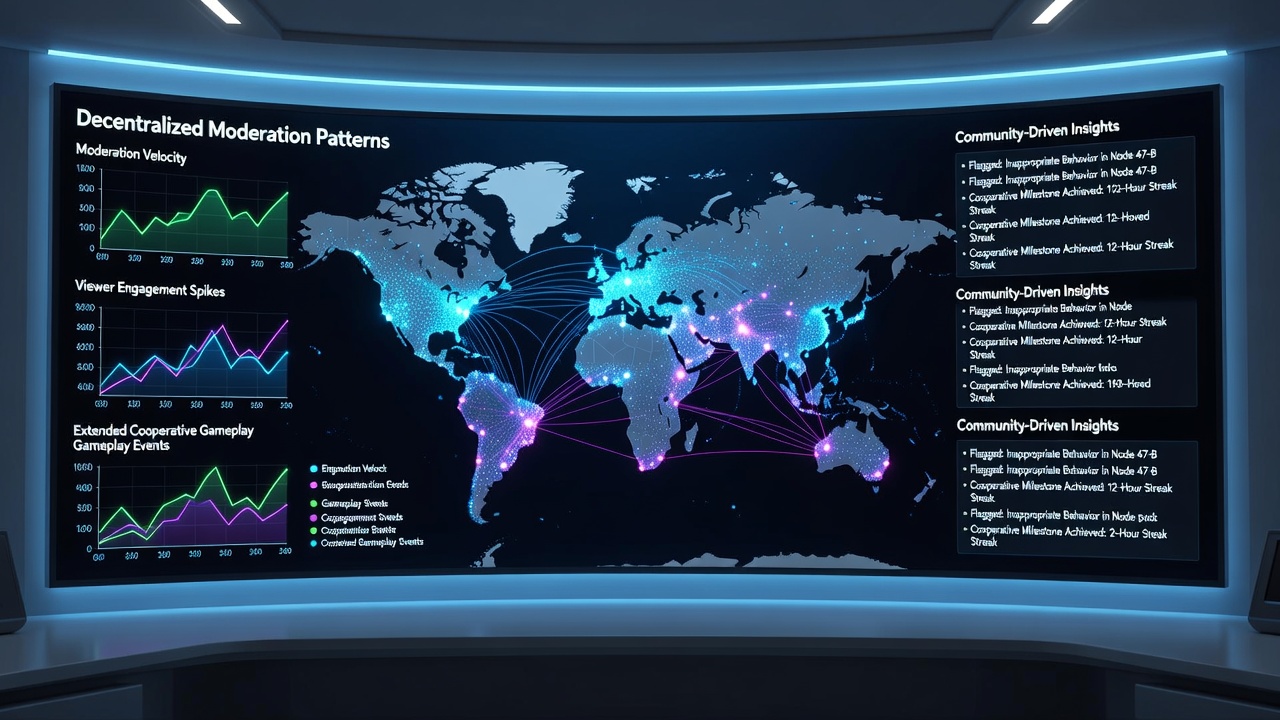
Tracking community-driven moderation patterns across decentralized viewer networks during extended cooperative gameplay events
Community-driven moderation in decentralized viewer networks has grown into a structured process that researchers now monitor through distributed logging systems and real-time analytics dashboards. These networks operate without central servers, so moderation relies on peer consensus mechanisms where participants flag issues, vote on responses, and apply temporary restrictions during extended cooperative gameplay events that can last from several hours to multiple days. Data collection begins with timestamped interaction logs that capture chat volume, sentiment shifts, and action triggers across nodes. Observers note that patterns emerge most clearly when events involve thousands of simultaneous users collaborating on shared objectives such as large-scale raids or persistent world-building sessions. According to industry reports from the Entertainment Software Association, participation in these extended events increased notably between 2023 and 2025, creating larger datasets for pattern analysis.Data collection methods in practice
Tracking tools aggregate anonymized signals from individual viewer clients rather than routing everything through a single authority. This approach uses lightweight protocols that record moderation events like user mutes, content filters, and escalation votes while preserving privacy through cryptographic hashing. Researchers at several universities have examined how these signals cluster during peak activity periods, revealing consistent sequences where initial reports from multiple nodes precede coordinated responses within three to five minutes.
One study released in early 2025 tracked moderation across a 48-hour cooperative tournament and found that decentralized voting reduced repeat violations by 62 percent compared with earlier centralized systems. The same analysis showed that geographic distribution of nodes influenced response speed, with clusters in North America and Europe achieving faster consensus than more dispersed groups spanning additional continents.
Patterns observed during prolonged sessions
Extended cooperative gameplay creates distinct moderation rhythms that repeat across different titles and communities. Early phases often feature high report volume as users test boundaries, followed by stabilization once core rules gain reinforcement through repeated application. Later stages show renewed spikes when fatigue sets in and coordination errors increase. Analysts have mapped these cycles using heatmaps that overlay moderation actions against gameplay milestones such as objective completions or server merges.
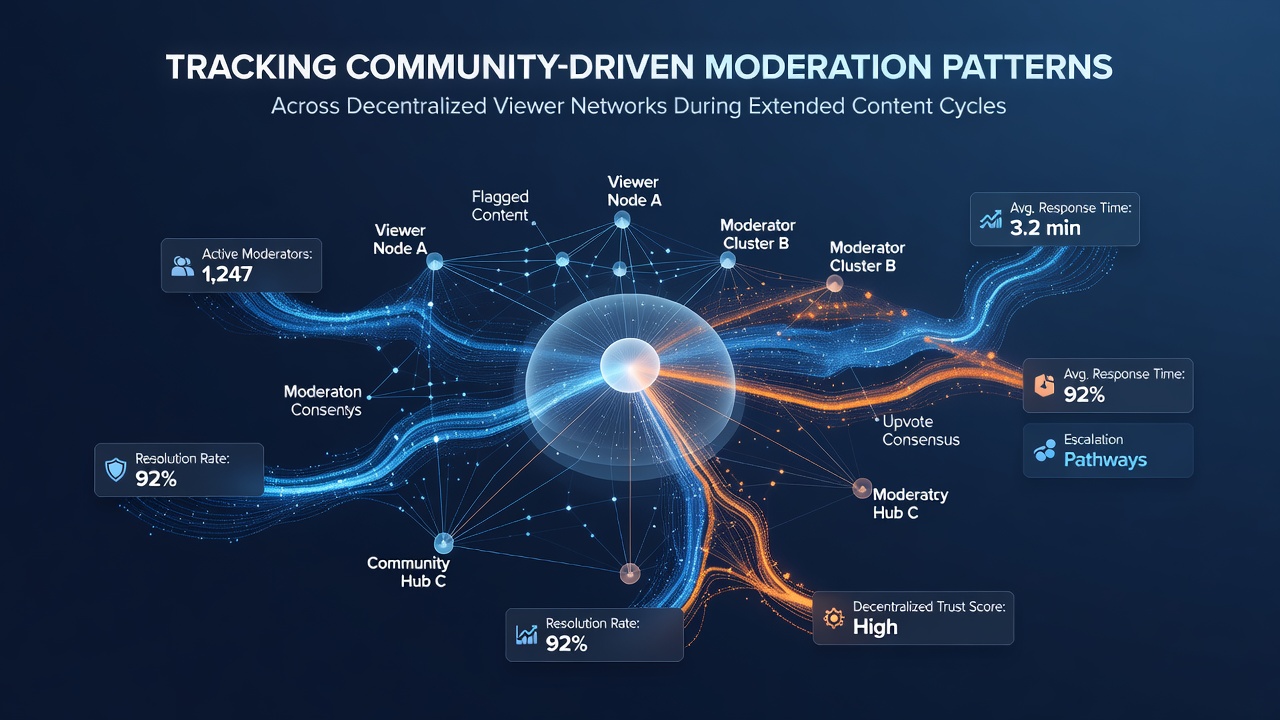
Figures from a 2024 report by the Interactive Games and Entertainment Association in Australia indicate that networks employing automated threshold detection alongside human voting handled 78 percent of standard infractions without manual intervention. The remaining cases required escalation votes distributed across at least five separate nodes to prevent single-point bias. These thresholds adjust dynamically based on total active participants and current chat velocity.
Integration with event scheduling in July 2026
Planned cooperative events scheduled for July 2026 have already prompted updates to moderation tracking frameworks. Organizers are testing predictive models that forecast moderation load based on historical participation curves and announced game updates. These models incorporate variables such as time-zone overlap, expected concurrent users, and prior event duration to allocate moderation resources across the decentralized network in advance.
European research groups have contributed open-source modules that allow nodes to share aggregated trend data without exposing individual user identities. The modules support real-time dashboards used by volunteer moderators who monitor live metrics during the event itself. Preliminary tests conducted in controlled environments demonstrated that these shared views improved response consistency across regions.
Challenges in maintaining consistency
Decentralized structures introduce variability in how different clusters interpret identical rulesets. Language differences, cultural expectations, and varying levels of experience among moderators all contribute to occasional divergence. Tracking systems address this through periodic reconciliation rounds where representative nodes compare recent decisions and surface discrepancies for community review.
Network latency and node availability further complicate real-time tracking. When segments of the viewer base experience temporary disconnects, moderation logs may arrive out of sequence, requiring timestamp reconciliation algorithms that align events based on cryptographic proof rather than arrival order. Developers continue refining these algorithms to reduce reconciliation overhead during high-intensity periods.
Conclusion
Tracking community-driven moderation across decentralized viewer networks during extended cooperative gameplay events relies on distributed logging, consensus mechanisms, and predictive analytics. Data from multiple regions shows measurable improvements in response consistency when networks combine automated thresholds with human voting. As events planned for July 2026 approach, ongoing refinements to reconciliation tools and shared dashboards are expected to support larger participant bases while preserving the decentralized character of these moderation systems.