Utilizing Sentiment-Driven Moderation Bots to Cultivate Inclusive Environments in Specialized Gaming Channel Communities
Alex Hayes · Jul 31, 2026
Utilizing Sentiment-Driven Moderation Bots to Cultivate Inclusive Environments in Specialized Gaming Channel Communities
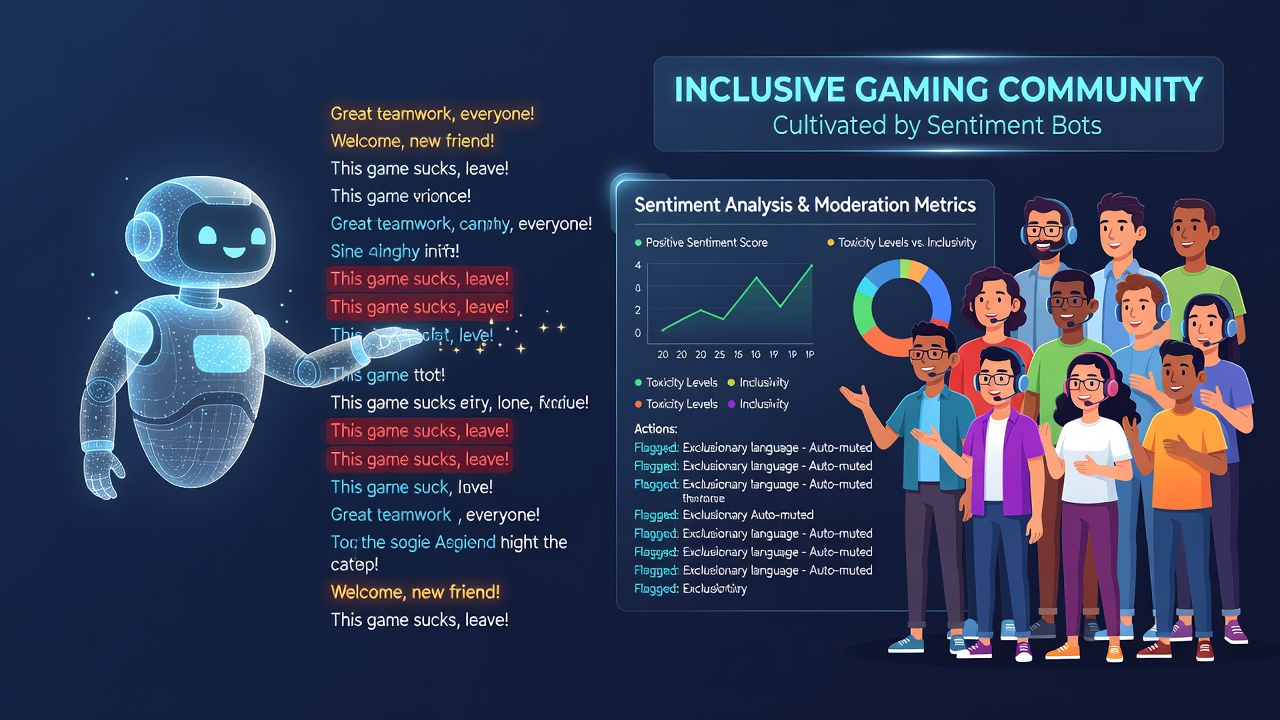
Specialized gaming channel communities rely on sentiment-driven moderation bots to analyze real-time chat interactions and flag content that risks undermining participation from diverse player groups, and these tools process text through natural language models trained on gaming-specific lexicons to detect patterns ranging from exclusionary language to coordinated harassment attempts. Researchers at institutions focused on digital communication have documented how such systems integrate with platform APIs to apply graduated responses, including temporary mutes or contextual warnings, while preserving open discussion threads that maintain community engagement levels.
Core Mechanisms Behind Sentiment Analysis in Gaming Chats
Bots evaluate message polarity by combining lexical databases with contextual embeddings that account for gaming slang, abbreviations, and evolving memes, whereas simpler keyword filters often miss nuanced expressions that still contribute to hostile atmospheres. Data from platform-wide deployments shows these models achieve accuracy rates above 85 percent when fine-tuned on community-specific datasets, and developers update training corpora quarterly to incorporate shifts observed during major tournament cycles. Observers note that integration with voice-to-text transcription extends coverage to audio channels in voice-heavy servers, allowing consistent enforcement across text and spoken exchanges.
Specialized communities dedicated to titles with complex lore or competitive ladders benefit particularly because bots can reference game mechanics when interpreting intent, such as distinguishing strategic trash talk from targeted exclusion based on player background. According to reports issued by the European Commission's digital services oversight unit in July 2026, moderated environments recorded measurable increases in sustained user retention across niche esports titles compared with unmoderated counterparts.
Implementation Strategies for Niche Gaming Groups
Channel administrators configure bot thresholds through dashboards that display aggregated sentiment scores over rolling time windows, and these interfaces allow manual overrides when cultural context requires adjustment beyond automated defaults. Teams managing communities for strategy games or simulation titles often layer multiple models so one handles general toxicity while another monitors topic-specific discussions such as team composition debates. Evidence from industry reports indicates that hybrid setups reduce false positives by 30 percent relative to single-model approaches.
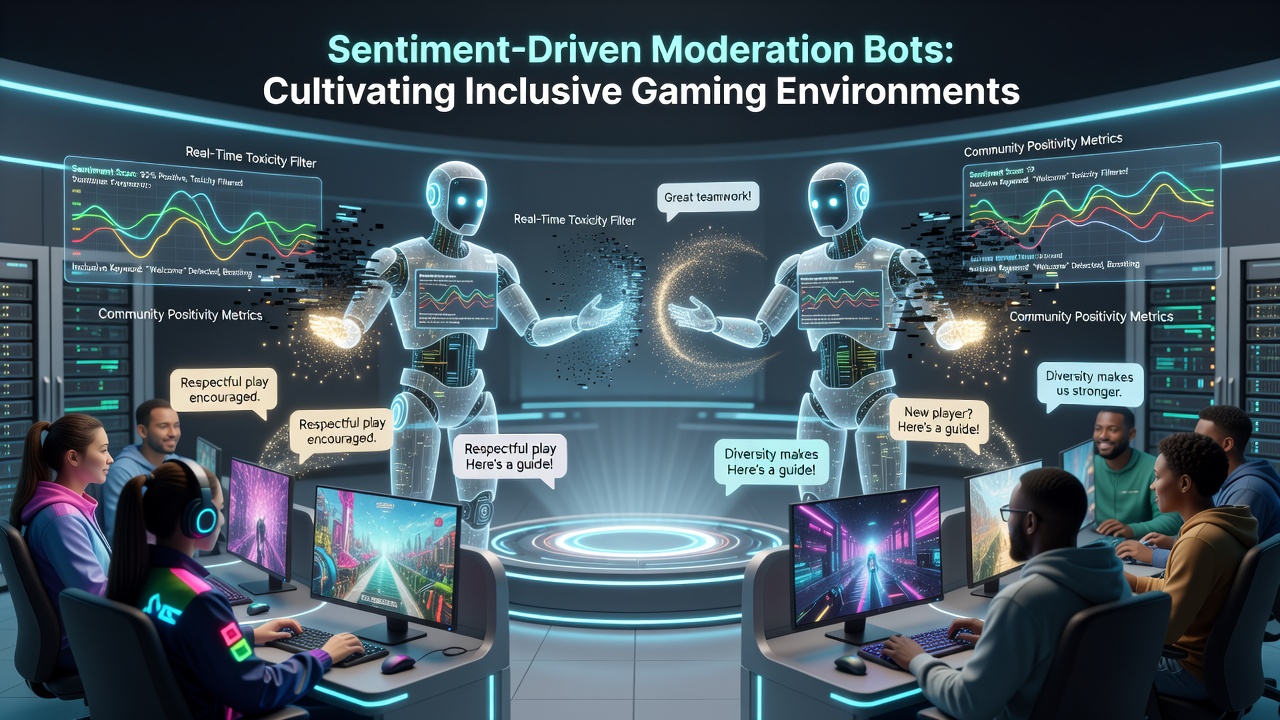
Those who oversee smaller Discord or Twitch subgroups frequently pair bots with human moderators during peak hours, creating feedback loops where disputed flags receive rapid review and model retraining occurs based on resolved cases. The Entertainment Software Association has published guidelines that emphasize transparent rule communication to members before bot activation, which correlates with higher acceptance rates in communities that adopted the practice early.
Observed Outcomes in Inclusive Environment Cultivation
Longitudinal tracking by academic research groups reveals that channels employing sentiment bots experience fewer mass exodus events following controversial matches, and participant surveys conducted through university partnerships link this stability to perceived fairness in moderation decisions. Figures from North American gaming trade analyses show specialized communities using these tools report broader demographic representation in leadership roles over multi-month periods. Yet implementation requires ongoing calibration because language evolves rapidly within subcultures, and bots without regular updates can inadvertently suppress legitimate criticism.
Cross-referencing with accessibility-focused studies from Canadian regulatory bodies demonstrates that inclusive chat environments also improve participation rates among players with communication-related disabilities when moderation reduces overwhelming negativity. Communities centered on cooperative gameplay genres document higher completion rates for group challenges once sentiment tools maintain baseline civility levels.
Technical Considerations and Data Integration
Developers embed sentiment bots within existing moderation stacks by routing chat logs through secure pipelines that anonymize user identifiers before analysis, and this architecture aligns with emerging data protection standards across multiple jurisdictions. Real-time dashboards aggregate metrics such as sentiment variance during live events, enabling proactive adjustments ahead of scheduled tournaments. Research papers from Australian digital media centers highlight how combining bot outputs with viewer retention analytics allows operators to correlate moderation actions directly with audience stability indicators.
Specialized channels handling retro or indie titles face unique vocabulary challenges that demand custom fine-tuning sessions, while larger esports hubs leverage pre-trained models refined on millions of tournament chat lines. Both approaches rely on periodic audits to verify that enforcement remains consistent across different time zones and player demographics.
Conclusion
Sentiment-driven moderation bots supply gaming communities with scalable mechanisms for maintaining dialogue standards that support broader participation, and ongoing refinements driven by platform data and external research continue to shape their effectiveness in specialized environments. Channel operators who integrate these systems with clear governance frameworks position their groups to sustain engagement across evolving player bases.